Sarcoidosis of the heart
Sarcoidosis of the heart, also called cardiac sarcoidosis or cardiac sarcoidosis, is an inflammatory disease of the heart in which so-called granulomas form in the heart muscle. These granulomas can cause various disorders of heart function. Since it is an inflammatory disease, it can be suppressed with drugs that reduce the inflammatory response. However, diagnosis by conventional cardiac imaging methods is very difficult, because granuloma involvement of the heart does not have a typical pattern and is very similar to simple fibrous degeneration.
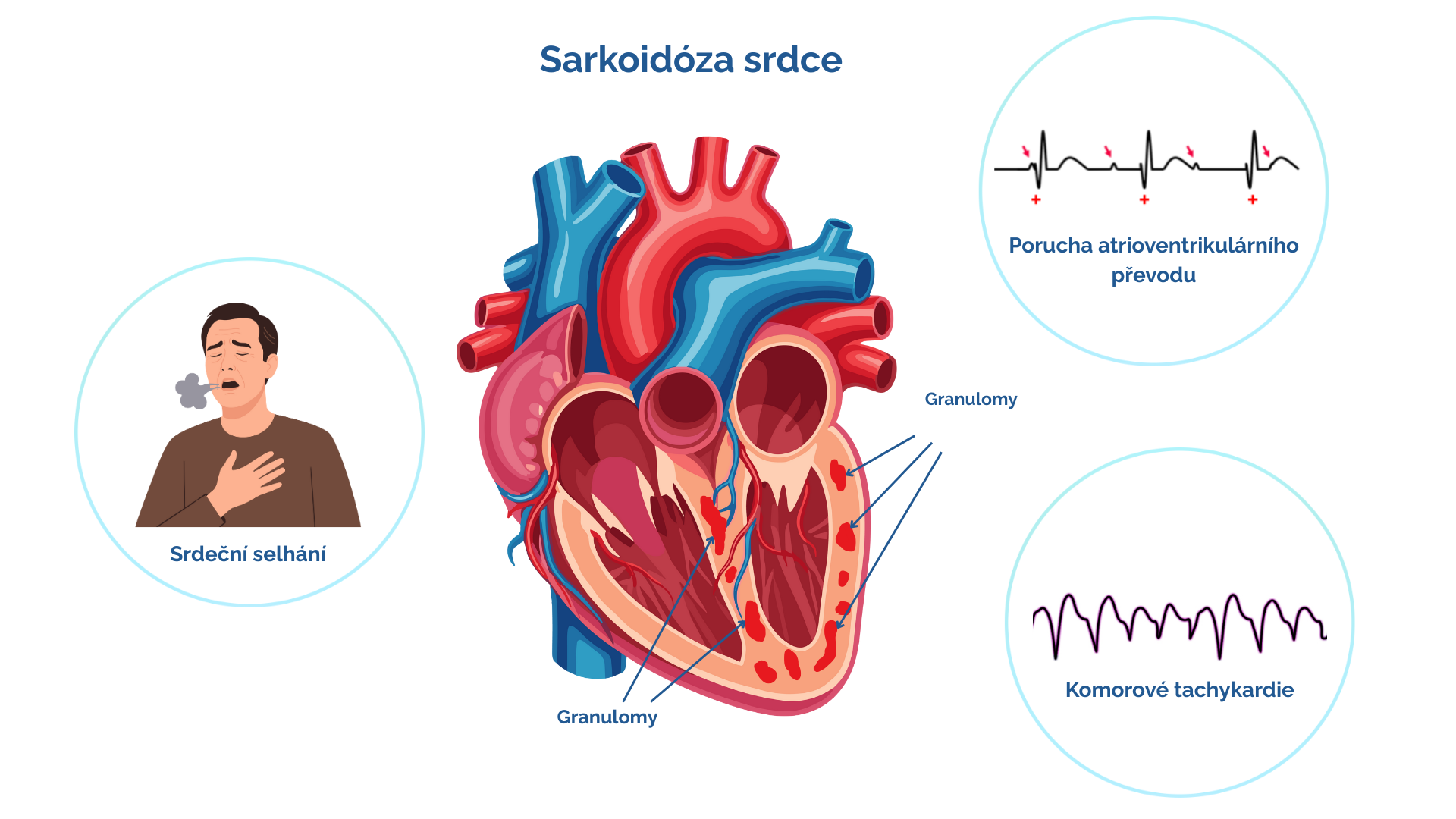
Schematic representation of cardiac sarcoidosis and its most common manifestations. Inflammatory areas containing microscopic granulomas are present in the left ventricle and interventricular septum.
Sarcoidosis can affect different organs simultaneously. The most common is lung disease - in almost 90% of cases, the heart is affected in an estimated 20% of cases. If the patient has known sarcoidosis in an organ other than the heart, it is recommended to actively investigate whether the heart is also damaged. The cause of sarcoidosis is unknown - hence it is called idiopathic inflammation. It may be an allergic reaction to an unknown substance in genetically predisposed individuals. Approximately 35 people per 100,000 are affected by sarcoidosis, but due to the difficulty of diagnosis, this figure may be an underestimate, with recent data indicating an incidence of up to 160 cases/100,000 people.
Cardiac sarcoidosis is manifested according to the part in which the granulomatous inflammation is localized. Most often, it may be atrial blockage - especially if it occurs at an age younger than 60 years. In addition, cardiac sarcoidosis may manifest as unexplained ventricular tachycardia or reduced left ventricular stiffness, especially if a bulge or thinning of the left ventricular wall is present and the coronary arteries are not affected.
Deciding whether the heart involvement is due to sarcoidosis is important because if the diagnosis is confirmed, treatment with inflammation suppressants can be initiated. The diagnosis of cardiac sarcoidosis cannot be made using basic investigative methods such as ECG and echo. However, magnetic resonance imaging (MRI) and positron emission tomography (PET) scans are of relatively good diagnostic value. MRI scans can show diseased areas where inflammation and scarring are taking place. PET scanning should be added to definitively demonstrate ongoing inflammation. If these methods demonstrate the presence of multiple foci of inflammation in the musculature of the heart, the diagnosis is likely. The likelihood of diagnosis is further increased if sarcoidosis is detected in organs other than the heart. To confirm the diagnosis definitively, the affected tissue must be biopsied and histologically examined for the presence of inflammatory granulomas. If a lesion suspected of sarcoidosis is outside the heart, a biopsy of this lesion is performed; a biopsy of the heart muscle itself can also be performed, but targeting the lesion is more difficult in this case.
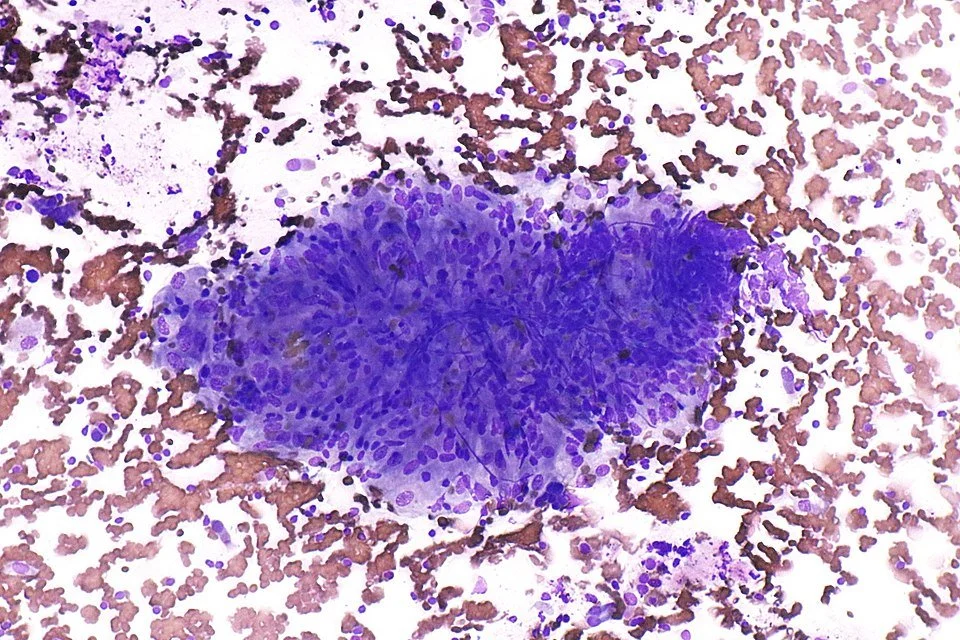
Microscopic finding of granulation inflammatory tissue (stained blue).
Inflammation suppressants - immunosuppressants - are used to treat sarcoidosis. Immunosuppressive drugs have a number of side effects, so their treatment is recommended only when the diagnosis of sarcoidosis is certain or almost certain. The main immunosuppressants used include prednisone, methotrexate, azathioprim and mycophenolate. More recently, biological therapy with agents such as adalimumab, rituximab, namilumab or infliximab may be used. Treatment with immunosuppressive drugs may lead to a reduction or slowing of the worsening of the symptoms of the disease, i.e. atrial block, ventricular tachycardia or heart failure. At the same time, however, treatment of these manifestations is always necessary, irrespective of the diagnosis of sarcoidosis - i.e. if a permanent pacemaker or implantable cardioverter-defibrillator must be implanted and any heart failure must be treated with drugs.
Cardiac sarcoidosis is now increasingly thought of as a cause of heart disease. When this disease is suspected, cardiac magnetic resonance imaging and positron emission tomography should be performed. The diagnosis is verified by histological examination of the affected tissues, particularly in localities outside the heart. Immunosuppressive treatment may lead to a reduction in the manifestations of heart disease, such as atrioventricular conduction disturbances, ventricular tachycardia and heart failure.