High cholesterol - treatment calculator
A clinical calculator for treating high cholesterol (dyslipidemia) based on current European Society of Cardiology guidelines. After entering LDL cholesterol levels and risk factors, the calculator recommends further steps, including the possible need for lipid-lowering treatment such as statins, and lists target LDL cholesterol levels that should be achieved through treatment.
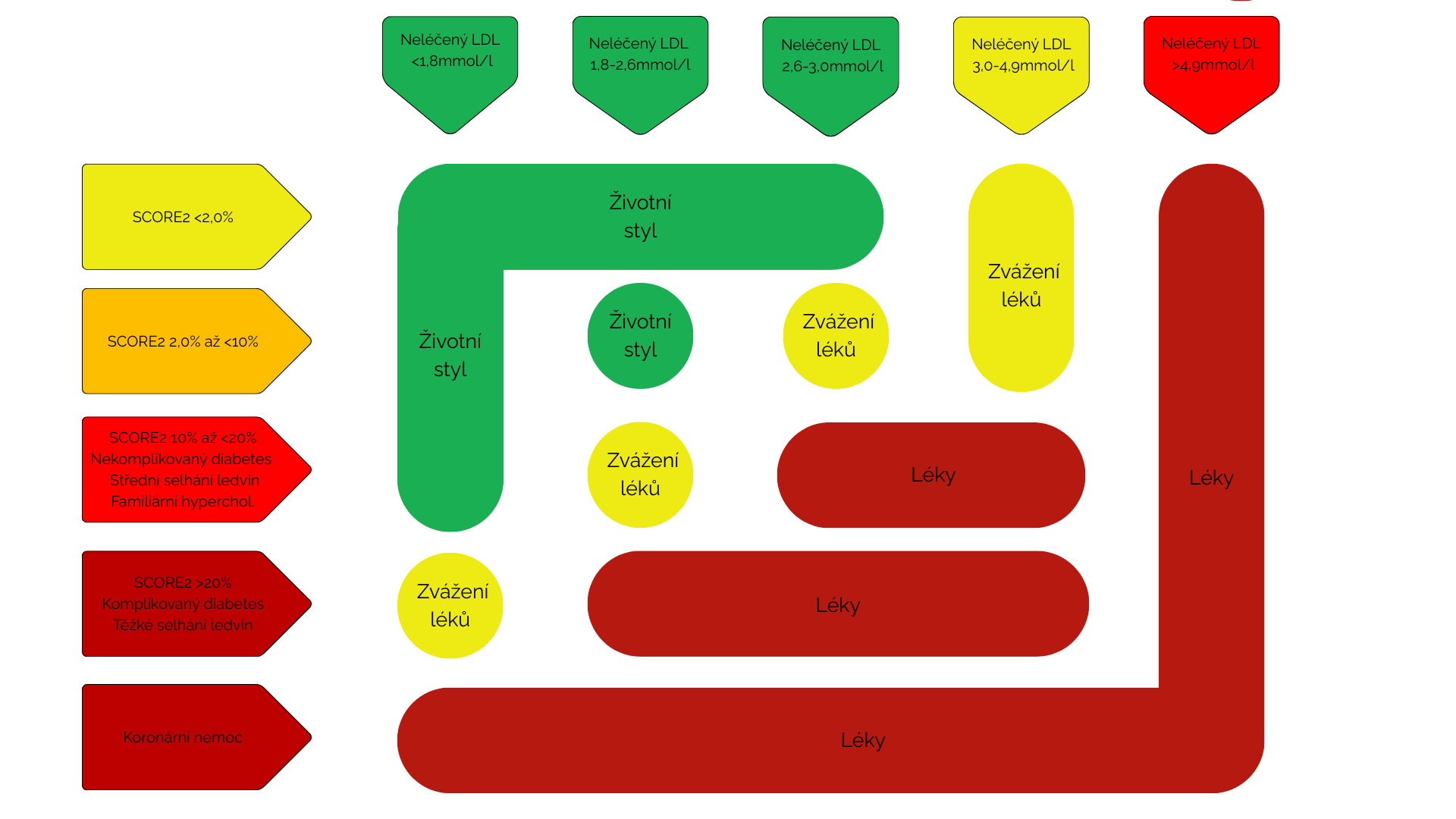
Principles for initiating treatment of dyslipidemia based on LDL cholesterol levels and risk factors – adapted according to current recommended procedures European Cardiology Society
Hypolipidemic treatment is based on statin therapy, which has been proven to reduce the risk of death in patients with known coronary artery disease, atherosclerotic disease in other locations such as the lower limbs or cerebral arteries, and also in patients with diabetes. If statin therapy does not achieve the target LDL cholesterol levels, ezetimibe, a substance that blocks the absorption of cholesterol from the intestine, is added to the therapy. If LDL cholesterol levels remain above 2.5 mmol/l at the maximum dose of statins in patients with known coronary artery disease or other manifestations of atherosclerosis, or if levels remain above 3.1 mmol/l in cases of congenital hypercholesterolemia, treatment with injectable PCSK9 inhibitors is indicated and covered by insurance. In case of statin intolerance, bempedoic acid is indicated. It can also be used in combination with other lipid-lowering drugs.
A particular risk factor is an elevated level of lipoprotein(a) Lp(a) above 105 nmol/l. If present, the patient's overall risk is increased by one degree.